Certified vs Uncertified: Why Topfeelpack's ISO Standards Matter for International Custom Packaging
SHENZHEN, GUANGDONG, CHINA, October 29, 2026 /EINPresswire.com/ -- For beauty brands sourcing custom packaging across borders, evaluating a supplier involves more than reviewing samples and comparing unit prices. A bottle may meet visual expectations, but buyers also need to understand how the manufacturer controls material traceability, component dimensions, dispensing performance, and batch consistency. These factors become particularly important when packaging must work with a specific formula, run on an automated filling line, and withstand international transport.
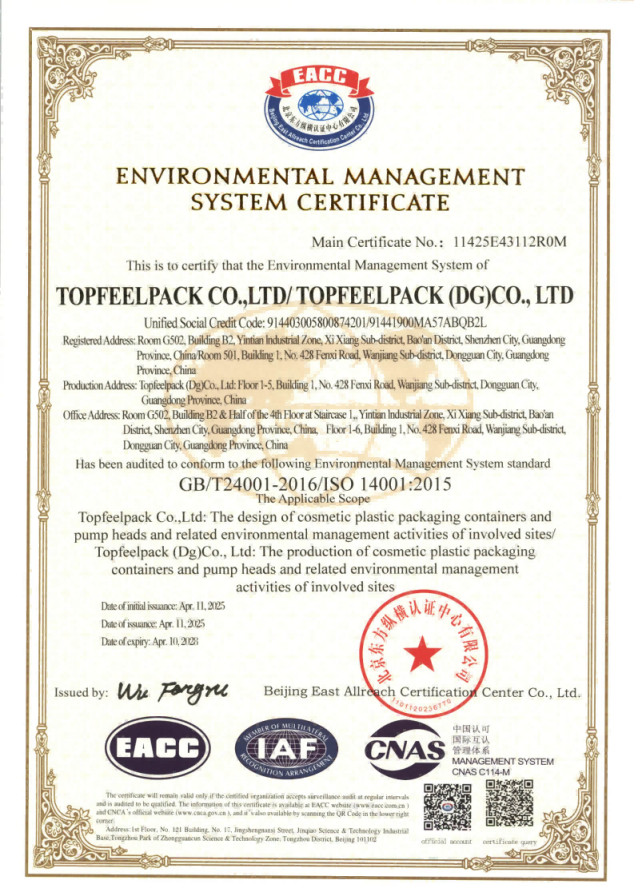
Choosing uncertified packaging suppliers to shave a few cents off unit costs is a high-stakes gamble. When components fail compatibility tests or leak active formulas, the fallout extends far beyond wasted plastic. It disrupts supply chains, compromises product efficacy, and invites regulatory penalties. This divide between certified and uncertified manufacturing is why adherence to strict international frameworks is non-negotiable. As an established ISO Certified Custom Packaging Manufacturer, Topfeelpack demonstrates that standardized quality control is the ultimate safeguard for global brand equity.
The Regulatory Imperative: Why Cosmetics Packaging Demands Strict Standards
Cosmetics and personal care formulations are complex chemical matrices containing active botanical extracts, retinoids, and preservatives that interact dynamically with their containers. Unlike general consumer goods packaging, beauty packaging must serve as an active barrier against oxidation, UV degradation, and microbial contamination.
When brands source from uncertified facilities, the risks multiply exponentially. Uncertified manufacturers often lack standardized material traceability, meaning resin batches can vary in purity, leading to inconsistent wall thicknesses, chemical leaching, or poor sealing integrity. Without a certified Quality Management System (QMS) in place, dimensional tolerances drift during high-speed production runs. The immediate consequences include pump leakage, delamination in multi-layer tubes, and incompatibility with sensitive formulations.
In contrast, an ISO-certified production environment enforces rigorous process controls from raw material intake to final boxing. Every production cycle undergoes systematic calibration, statistical process control (SPC), and lot tracking. This level of discipline ensures that a cream jar manufactured today matches the exact mechanical performance and chemical resistance of a batch produced six months prior, protecting both the product formula and the brand's market reputation.
Localized Insights: Frequently Asked Questions
How do ISO standards directly impact custom tooling development? ISO frameworks require strict documentation and validation during the mold-making phase. This ensures that shrinkage rates, cooling channels, and injection pressures are mathematically accounted for, resulting in tooling that yields consistent parts from the very first shot.
What specific ISO certifications should beauty brands look for in a packaging supplier? Brands should primarily look for ISO 9001 (Quality Management System) for process consistency and defect prevention, and ISO 22716 (Good Manufacturing Practices for Cosmetics) to ensure safety and hygiene standards. Facilities with ISO 14001 (Environmental Management) also demonstrate certified protocols for waste reduction and sustainable production.
How does an ISO-certified facility prevent formula contamination and leaching? ISO standards enforce strict raw material inspection and cleanroom environment standards (often ISO Class 7 or 8). Every batch of resin and component undergoes standardized compatibility and migration testing against raw chemical matrices, preventing toxic leaching or formula breakdown over time.
Can an uncertified supplier still deliver acceptable quality for low-risk packaging? While uncertified suppliers may occasionally produce acceptable simple jars or caps, they lack standardized Statistical Process Control (SPC). Without ISO protocols, batch-to-batch variation increases drastically, creating severe failure risks when packages are subjected to high-speed automated filling or temperature shifts during international transit.
Optimizing the Total Cost of Ownership (TCO)
When calculating the financial viability of a packaging partner, focusing solely on the initial per-unit quotation is a deceptive metric. Uncertified packaging often introduces hidden downstream expenses: high rejection rates during automated assembly, customer service claims due to leaking product packages, expedited freight costs for emergency replacements, and severe brand damage from market recalls.
Adhering to strict ISO quality standards drastically mitigates these risks by reducing transit and handling damages. Standardized drop-testing, pressure differential evaluations, and climate-chamber stress testing ensure that packaging maintains structural integrity during long-haul sea, air, and last-mile freight. This controlled durability drastically lowers defect rates, prevents costly product loss during distribution, and protects profit margins from hidden logistics drain.
True manufacturing value is defined by Total Cost of Ownership (TCO)-a metric optimized through predictable quality, rigorous compliance, and streamlined execution. By partnering with a verified manufacturer equipped with standardized quality systems, robust R&D, and sustainable material options, beauty brands protect their capital, streamline compliance, and deliver uncompromised product experiences to consumers worldwide.
Integrated Capabilities and Global Reach
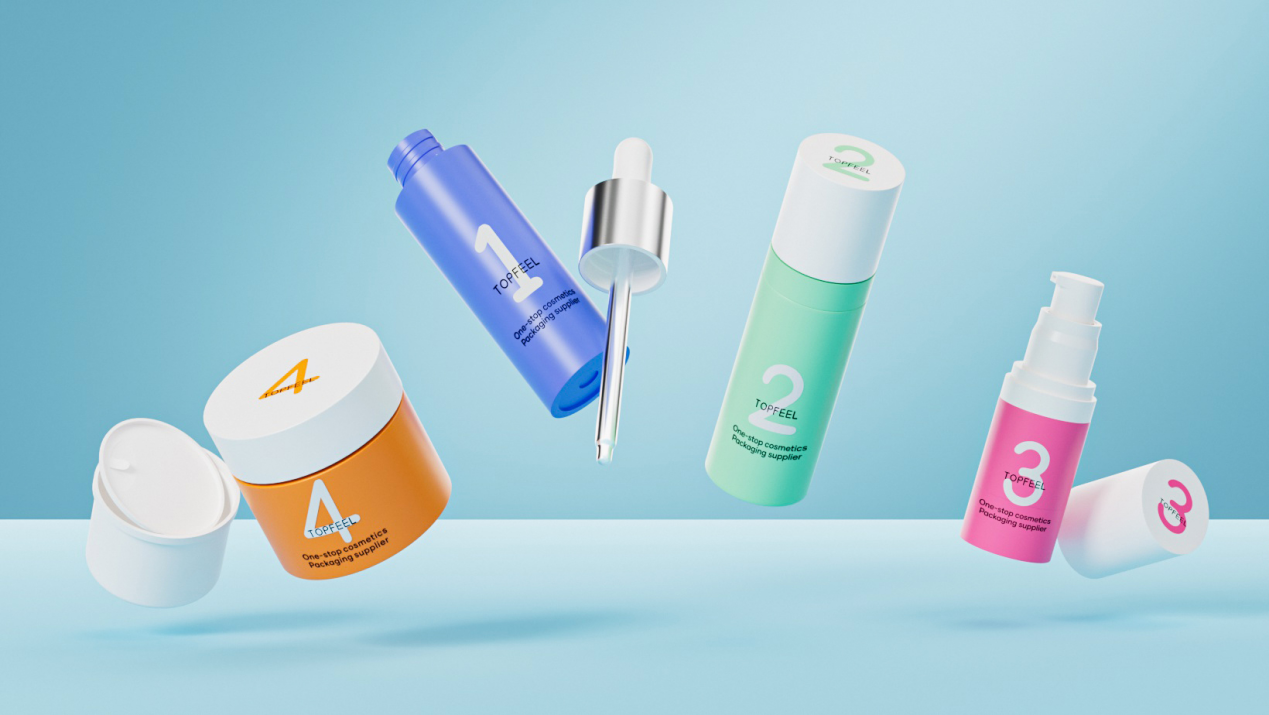
Operating at the intersection of design innovation and industrial scale, Topfeelpack functions as a comprehensive partner for beauty brands navigating the global marketplace. Specializing in R&D, advanced manufacturing, and strategic marketing support, the company provides end-to-end solutions that cover airless bottles, lotion bottles, cream jars, dropper bottles, cosmetic tubes, and precision dispensers.
The core philosophy centers on a "Speed to Market" framework, which accelerates product development timelines through rapid prototyping and agile engineering support. By combining robust in-house manufacturing capabilities with flexible OEM and ODM services, the company helps global brands across Europe, North America, and Australia simplify complex sourcing channels, lower development overhead, and maintain consistent quality across international product lines.
Securing Your Next Packaging Project
Evaluating custom packaging partners requires a careful balance of creative vision and rigorous technical validation. If your team is currently developing a new line of sustainable skincare or color cosmetics and requires dependable, ISO-compliant manufacturing solutions from prototype to mass production, explore how integrated engineering can streamline your supply chain.
Visit the official website to review product specifications and connect with technical specialists: https://www.topfeelpack.com/
Topfeelpack
Topfeelpack
Legal Disclaimer:
EIN Presswire provides this news content "as is" without warranty of any kind. We do not accept any responsibility or liability for the accuracy, content, images, videos, licenses, completeness, legality, or reliability of the information contained in this article. If you have any complaints or copyright issues related to this article, kindly contact the author above.